
Lotus Esprit GT3 Buyer’s Guide: Specs, Rarity and Investment Value
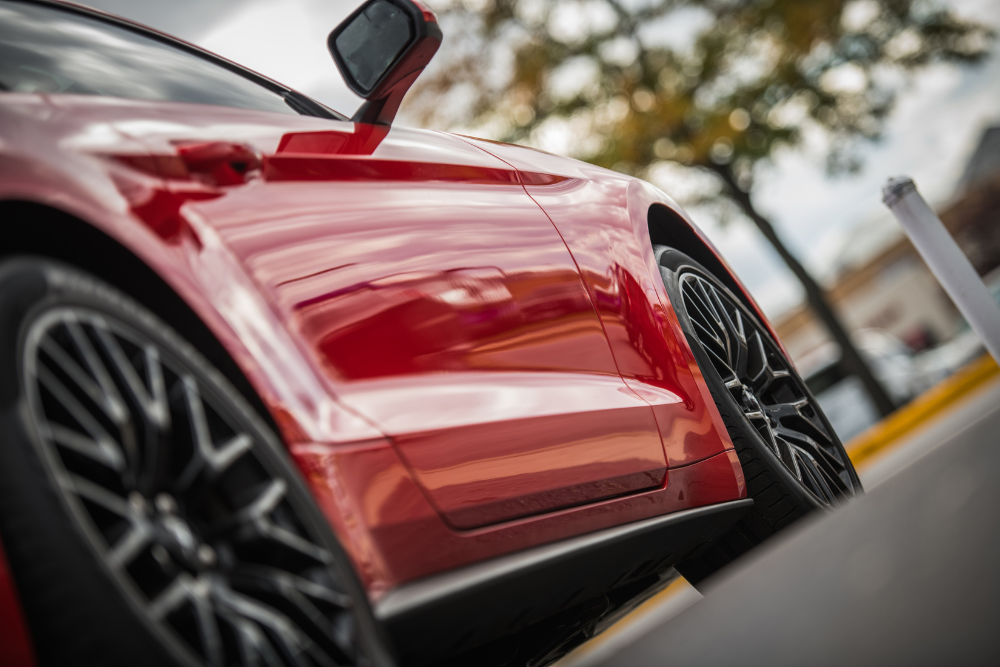
Some cars chase horsepower. The Lotus Esprit chased something rarer: purity. The 1999 Lotus Esprit GT3 is arguably the sharpest expression of that idea, a lightweight, turbocharged, mid-engined wedge that could embarrass supercars costing twice as much. With only 196 ever produced, it has become one of the most quietly coveted modern classics on the market.
At Classic Car Imports, we specialise in sourcing rare, investment-grade vehicles for collectors across Australia, and few cars capture that brief better than the Esprit GT3. This guide covers what makes it special, how it drives, why values are climbing, and what to look for before you buy.
A Bond-Bred British Legend
The Lotus Esprit needs little introduction. Penned as a dramatic origami wedge and immortalised on screen, most famously as the submarine car in The Spy Who Loved Me and later in Pretty Woman, it has been Britain’s dare-to-be-different supercar since the 1970s. The Esprit enjoyed a remarkable production run of nearly three decades, from 1976 to 2004.
The GT3 arrived near the end of that story. Launched in 1996 as an entry-level, no-frills Esprit, it was designed to bring the marque within reach of newcomers to the supercar world. Ironically, by stripping things back, Lotus created what many enthusiasts consider the best-driving Esprit of all. It quickly earned a reputation as the “driver’s Esprit.”
Key Specifications at a Glance
- Engine: Mid-mounted 2.0 litre (1,973 cc) 16-valve turbocharged, charge-cooled inline-four (Type 920)
- Power: 240 bhp at 6,250 rpm
- Torque: 216 lb-ft at 3,750 rpm
- 0 to 60 mph: Approximately 5.1 seconds
- Top speed: Around 163 mph (263 km/h)
- Transmission: Five-speed manual transaxle, rear-wheel drive
- Chassis: Steel backbone with lightweight composite bodywork, two seats
- Production: Just 196 units built worldwide
On paper, a 2.0 litre four might seem modest next to a big Aussie V8. In practice, the numbers tell only half the story. At roughly 1,230 kg, the GT3 lives by Colin Chapman’s founding philosophy: “simplify, then add lightness.” The result is a car that feels faster, sharper, and more alive than its displacement suggests.
Why This Example Is So Special
The GT3 was rare when new. Three decades later, a clean example is a genuine unicorn. The car currently offered by Classic Car Imports raises that rarity to another level: it is one of only two GT3s finished in vibrant orange, and one of fewer than five Esprit GT3s known to exist in all of Australia.
Presented in right-hand drive with a five-speed manual and around 88,000 miles, it is a car that combines usable condition with the kind of provenance that serious collectors look for. In a market saturated with familiar Ferraris and Porsches, an Esprit GT3 in a unique factory colour is exactly the sort of standout piece that anchors a high-end collection.
What It’s Like to Drive
This is where the GT3 earns its legend. The turbocharged four spins up eagerly, the mid-engined balance is impeccable, and the unassisted feedback through the wheel is the stuff modern cars have largely engineered away. On a winding coastal road, the GT3 flows through corners with a precision that heavier machinery simply cannot match. Every input is met with immediate, honest response.
It is not about brute force. It is about connection, the increasingly rare sensation of a car working with the driver rather than insulating them from the road.
The Investment Case
Values for the Esprit GT3 have been trending steadily upward, driven by a simple equation: tiny production numbers, a beloved nameplate, and growing recognition that this was the last of the analogue four-cylinder Esprits. As one of the final iterations before the model bowed out, the GT3 represents a swan song for a certain kind of pure British sports car.
For collectors weighing options, it slots naturally alongside other appreciating modern classics. If a mid-engined exotic from the same era appeals, our 1991 Ferrari 348 TS offers Italian flair with a removable targa top. Those drawn to air-cooled purity may prefer the 1982 Porsche 911 SC or the more usable 2005 Porsche 911 (997) Carrera 2S. And for lovers of open-top British grand touring, the 1993 Jaguar XJS 6.0 Convertible remains a compelling companion piece.
Buying a Lotus Esprit GT3 in Australia
Importing and owning a car this rare rewards doing it properly. A few things worth checking on any Esprit GT3:
- Service history: Turbocharged Lotus engines respond well to consistent care. Look for a documented maintenance record.
- Cooling and turbo health: Confirm the charge-cooling system and turbocharger are in good order, with no signs of overheating.
- Chassis and body: Inspect the steel backbone chassis for corrosion, and check the composite body for quality of repair and paint.
- Originality: Correct factory colour, trim, and specification support long-term value, especially on a rare-colour car.
- Provenance: With only 196 built, history and documentation matter enormously.
Because Classic Car Imports handles sourcing, shipping, compliance, and registration end to end, buyers can acquire a car like this with confidence rather than guesswork.
Related Reading
- Jaguar XJS V12 Convertible: Why This V12 Drop-Top Still Feels Special
- 1993 Jaguar XJS 6.0 Convertible: Classic British Motoring Refined
- 2005 Porsche 911 (997) Carrera 2S: A Modern Classic Between Eras
- 1991 Ferrari 348 TS
Frequently Asked Questions
How many Lotus Esprit GT3s were made? Only 196 GT3s were produced worldwide, making it one of the rarest Esprit variants. The example offered by Classic Car Imports is one of just two finished in orange and one of fewer than five in Australia.
What engine does the 1999 Lotus Esprit GT3 have? It uses a mid-mounted 2.0 litre turbocharged, charge-cooled 16-valve inline-four (the Type 920) producing 240 bhp, paired with a five-speed manual transaxle driving the rear wheels.
Is the Esprit GT3 fast? Yes. Despite its modest displacement, its light weight allows a 0 to 60 mph time of around 5.1 seconds and a top speed near 163 mph, figures that shamed far more expensive supercars of the era.
Why is the GT3 considered the best-driving Esprit? Built as a lightweight, no-frills model, the GT3 delivers exceptional balance, steering feel, and responsiveness, embodying Lotus founder Colin Chapman’s “simplify, then add lightness” philosophy.
Is a Lotus Esprit GT3 a good investment? With only 196 built and rising collector interest in analogue British sports cars, well-documented GT3s have shown steady appreciation, particularly rare-specification examples in original condition.
Can I buy the 1999 Lotus Esprit GT3 in Australia? Yes. This genuine example is available now through Classic Car Imports. Private inspections can be arranged by appointment.
Interested in owning one of the rarest Lotus Esprits in the country? View the 1999 Lotus Esprit GT3 or get in touch with Classic Car Imports to arrange a private inspection.