
Jaguar XJS V12 Convertible – Why this V12 drop-top still feels special
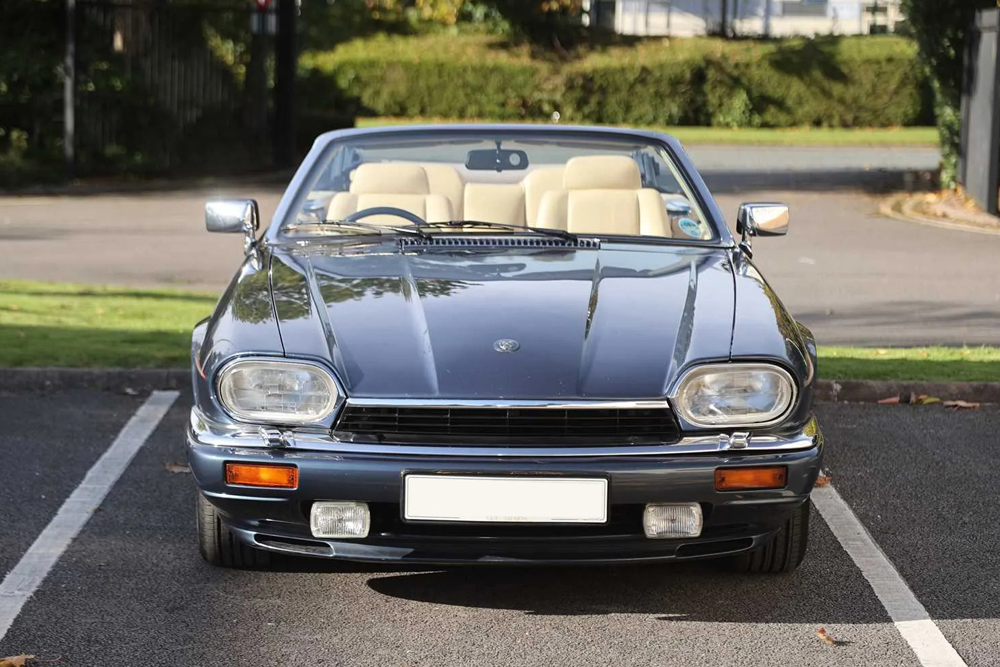
Experience the charm of British open-top motoring with a dose of V12 smoothness, all without needing supercar money. The 1991 Jaguar XJS 5.3 Convertible sits in a sweet spot: it delivers the long-bonnet glamour and relaxed grand-touring manners people buy classic Jaguars for, yet it remains one of the more accessible ways into a genuine twelve-cylinder classic.
This particular example is exactly the kind of XJS that makes sense for an enthusiast who actually wants to drive their car. With only two careful previous owners and presented in excellent condition, it reads like a vehicle that’s been enjoyed, but never used up. The appeal is simple: hood down, a coastal road ahead, and that unmistakable V12 character—refined at a cruise, quietly menacing when you lean into the throttle. The XJS doesn’t do “hard-edged” like an Italian exotic; it does effortless. That matters on real roads.
Visually, the XJS rewards traditional tastes. Think a dignified exterior colour (British Racing Green or a deep navy suits the shape beautifully), with cream leather and burled wood trim that turns the cabin into a rolling gentleman’s club. The result is a car that looks equally at home outside a country club or parked by the water, because it was always designed to be a grand tourer first—and a statement, second.
Where the early nineties XJS fits in Jaguar history
To understand why an early-nineties XJS convertible is so appealing, it helps to know what the model is. The XJ-S (later marketed as XJS) replaced the E-Type, but it wasn’t conceived as a direct sports-car successor. It was a larger, more mature grand tourer built to cover distance in comfort—fast, stable, and unmistakably British.
The roadmap matters here:
- The XJ-S/XJS ran for more than two decades, and ended up selling in numbers that eclipsed the E-Type’s production record—over 115,000 examples across the full production run.
- The factory convertible arrived in 1988 and launched initially with the 5.3-litre V12, backed by a sophisticated power hood design (not a basic manual arrangement), engineered to feel like a proper luxury product rather than an afterthought.
- The model received meaningful updates around the early nineties, including a broader refresh and continuing improvements to structure and refinement—important for convertibles, where rigidity and long-term integrity are central to how the car drives and ages.
In other words, a 1991 V12 convertible gives you the classic XJS character—long, low, elegant—while benefiting from Jaguar’s steady march of improvements across the model’s long life.
The V12 character and what makes the 5.3 special
The headline feature is the engine: Jaguar’s 5.3-litre V12, famed for smoothness and a delivery that feels more like a turbine than a traditional muscle-car V8. The XJS gained a significant shot of credibility in the early eighties with the High Efficiency (HE) update, using a Michael May-designed combustion chamber concept that improved efficiency and helped the model stay relevant.
On the road, the reason enthusiasts chase the V12 isn’t just the sound; it’s the way the performance arrives. Rather than building drama with revs, the car leans on low-speed torque and refinement. Period performance figures vary by market and specification, but the broad picture is consistent: the 5.3-litre V12 cars are genuinely fast for their era, with top speeds around 150 mph and 0–60 mph often quoted in the seven-second range.
One practical detail that shapes the driving experience (and ownership expectations) is the transmission. Many V12 XJS examples used a three-speed automatic for much of the model’s run, with later cars gaining an additional ratio. The three-speed suits the XJS’s character: it’s tuned for creamy progress rather than sharp, sporty shifts—exactly what you want in a luxury drop-top designed to cross states, not chase apexes.
Ownership realities and what to check before you buy
A well-sorted XJS convertible is deeply satisfying. A neglected one can be expensive. The difference usually comes down to evidence of maintenance, smart preventative work, and careful storage.
Bodywork and rust remain a primary concern. The XJS isn’t famous for rust-proofing, and while later shells improved, any example needs a methodical inspection—wheelarches, sills, doors, and floorpans are among the commonly discussed areas.
Cooling system condition is non-negotiable on V12 cars. Multiple buying guides emphasise coolant health and correct servicing intervals, because radiators can clog and overheating can lead to major expense. If the temperature gauge behaves oddly on a test drive, or if there’s evidence the cooling system has been ignored, it’s the kind of red flag that should either adjust the price substantially or end the conversation entirely.
Electrics and interior details matter more than you might expect, because the XJS was well-equipped for its day—and that means more components to age. Check every switch, gauge, window motor, and warning light, and pay attention to damp carpets, which can point to leaks and create knock-on issues. Convertibles add another mandatory check: hood condition and hood mechanism operation. A slow or struggling roof isn’t just inconvenient; it can suggest deeper issues (hydraulics, alignment, seals), and fixing it properly is rarely cheap.
Why this XJS makes sense as a modern classic
The XJS spent years living in the shadow of the E-Type. That perception is changing. More recent guides and market commentary describe the model as a highly respected grand-touring classic, with increased demand helping the best examples move upward in value.
What tends to separate the “nice car” from the “smart buy” is the same factor your brief highlights: provenance and condition. Low-owner, well-documented V12 convertibles are getting harder to find, and guides note that genuinely mint, low-mileage V12 cars are now comparatively scarce and can command strong money relative to average examples.
Importantly for buyers in Australia, local advertised pricing also shows why the XJS is often described as a way into classic V12 ownership without the price tags attached to many European contemporaries. Current listings for XJS convertibles in Australia span a wide range depending on engine, mileage and condition, with V12 5.3-litre cars commonly appearing in the tens-of-thousands rather than the hundreds.
That’s the XJS proposition in one line: classic V12 theatre, genuine grand-touring comfort, and a market that increasingly rewards the right cars—those that are sorted, honest, and properly presented.
Your next step
If the idea of a refined V12 convertible belongs on your driveway, the smartest move is to buy the best example you can—one with clean presentation, strong history, and the kind of careful ownership that sets it apart from the average survivor.
CCI | Classic Car Imports helps you do exactly that. Whether you’re sourcing locally or looking overseas, we can guide the entire journey—from identifying the right specification and verifying condition, to navigating import logistics and compliance—so you can focus on what matters: owning a classic Jaguar you’re proud to drive, show, and keep.
References
- Jaguar Enthusiasts’ Club model history and specification overview.
- Jaguar Daimler Heritage Trust feature on the factory XJ-S/XJS convertible’s development and early updates.
- Classics World buyer’s guide covering known issues, maintenance priorities, and market commentary.
- Magneto Magazine buying guide with ownership checks and spec ranges (engine, gearbox, rust, cooling).
- carsales current Australian advertised listing snapshots for XJS convertibles.
- CarsGuide example listing context for a 1991 XJS V12 convertible in Australia.
- Dandy Classics commentary on the XJS’s changing perception and value appreciation narrative.
- Wikipedia background context on the XJ-S/XJS production run and evolution.
Frequently asked questions
1. What is the difference between the 5.3-litre V12 XJS and the later 6.0-litre cars?
The 5.3 prioritises classic, early-character smoothness and traditional GT feel, while later 6.0-litre cars brought a capacity increase and additional late-model refinement changes. The 5.3 also represents the original factory convertible formula introduced in the late eighties, which many buyers view as the purest expression of the model.
2. Does a 1991 XJS convertible have rear seats?
Many early factory convertibles were originally configured as two-seaters, with rear seating arriving later as Jaguar continued structural and packaging updates. If rear seats matter to you, confirm the exact configuration of the car you’re buying rather than assuming all convertibles are 2+2.
3. How fast is a 5.3-litre V12 XJS convertible in real terms?
Figures vary by market and specification, but buying guides commonly describe top speeds around 150 mph and 0–60 mph in the seven-second range, which remains brisk today in the context of a luxury convertible.
4. Is the V12 expensive to maintain?
It can be if maintenance has been deferred. The V12 itself is often described as inherently robust when cared for, but cooling system condition, service history, and evidence of preventative work are critical. Budgeting for proper servicing and insisting on a well-maintained example typically costs less than “catching up” a neglected one.
5. What are the main rust and water-ingress areas to inspect?
Common discussion points include sills, wheelarches, doors, and floor areas, plus windscreen/scuttle and any places where water can enter and remain trapped. Also check for damp carpets, which can indicate leaks and lead to broader issues.
6. Why buy an XJS through a specialist rather than “whatever’s cheapest online”?
Because the spread between a well-sorted XJS and a problem car can be enormous. Specialists focus on provenance, condition and history, and can help you avoid false economy by identifying hidden rust, cooling issues, tired hood mechanisms, and deferred servicing that don’t always show up in photos.