
1967 Mini Cooper S Mk : Concourse restoration and the Mk1 look
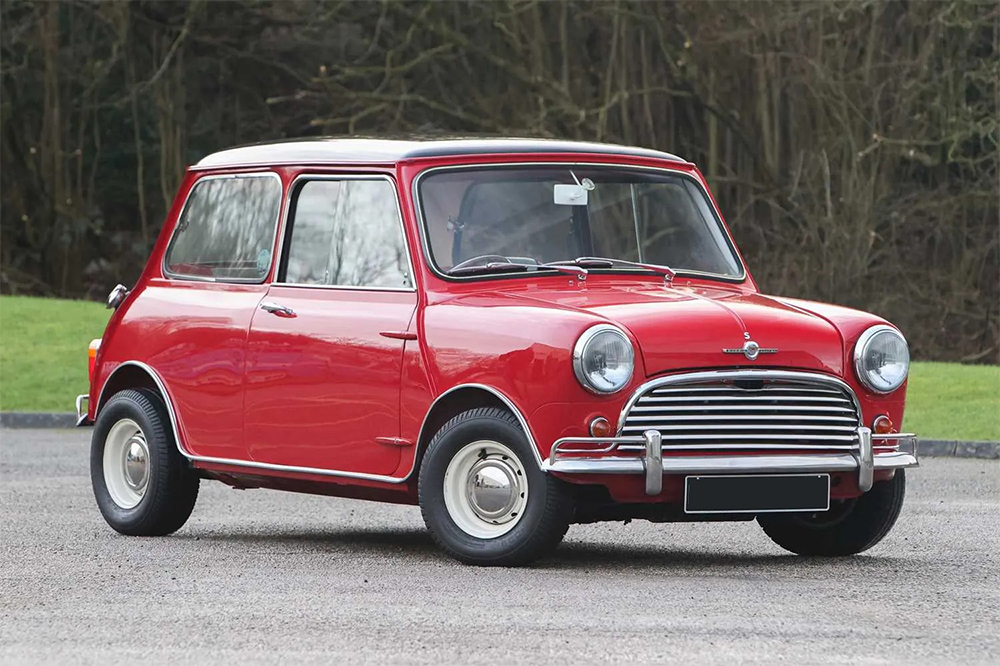
Small in size, immense in legacy, the 1967 Mini Cooper S Mk1 is the clearest proof that greatness isn’t measured in cylinders or inches. The example showcased by https://thecci.company/ is presented in concours condition following a professional, no-expense-spared restoration, and it’s offered with a manual transmission, right-hand drive, and a “Syncro gearbox” upgrade intended to make the driving experience more usable in the real world.
The styling does half the storytelling before you even turn the key. The Mk1’s classic two-tone look with a contrasting white roof, plus the rally-inspired stripes and flares, gives it the cheeky champion vibe that made these cars icons in the first place. As a generation, the Mark I Mini is defined by early details that enthusiasts actively hunt for, including external door hinges and the distinctive “moustache” grille, alongside other period cues that instantly separate it from later Minis.
Australia’s giant-killer moment at Mount Panorama
The Mini’s legend isn’t just European rally folklore; it’s etched into Australian motor-racing history. The upset that still gets repeated in conversation happened at the 1966 Gallaher 500 at Mount Panorama Circuit, where a Morris Mini Cooper S driven by Bob Holden and Rauno Aaltonen took outright victory against larger, more powerful cars.
That win wasn’t a fluke: Minis filled the first nine places on the grid that year and also finished first through ninth outright, a level of dominance that’s become one of the most famous underdog stories in Australian touring-car history. If you want one simple reason this Mk1 Cooper S carries such emotional pull in Australia, it’s this: it taught local enthusiasts that handling, weight, and clever engineering could humble brute force.
Why it feels so alive from the first corner
At the heart of the experience is the 1275cc British Motor Corporation A-series four-cylinder. In Mark I Cooper S form, the 1275 is commonly quoted at around 76 bhp and 79 lb-ft, which doesn’t sound dramatic until you remember what it’s moving: a car in the mid-600 kg range in period tests and summaries, with front-drive traction and a short wheelbase that makes every input feel immediate.
Australian commentary has long pointed out the Cooper S’s “go-kart handling” and how its power-to-weight made it a genuine performance car, not a novelty. That’s why this car works in modern conditions: it isn’t fast only at the limit, it’s entertaining at suburban speeds too—darting through city gaps and tightening its line mid-corner with the kind of eagerness that newer, heavier performance cars sometimes struggle to replicate.
The “Syncro gearbox” detail in the CCI listing matters because early Mini gearboxes are widely described as “3-synchro” (synchromesh on 2nd–4th) with a crash-style first gear, while later designs added synchromesh on all forward gears. In plain terms: a synchromesh upgrade can make stop-start driving and everyday shifts more forgiving, without stealing the car’s analogue personality.
The pedigree behind the cheeky face
Part of the Mk1 Cooper S appeal is that it’s a cultural icon with genuine competition credibility. The modern BMW Group heritage materials recount how the Mini Cooper S won the Monte Carlo Rally in 1964 with Paddy Hopkirk and Henry Liddon, then added further overall wins in 1965 and 1967 through Timo Mäkinen and Aaltonen. The storyline is consistent: light weight, front-wheel drive, and smart packaging repeatedly beat bigger rivals on difficult roads.
The Cooper story also has a name attached that collectors respect: John Cooper, whose performance instinct helped turn a humble small car into a giant-killer.
Collectability and why top-tier examples attract serious buyers
For collectors and investor-minded enthusiasts, the Mk1 Cooper S sits in a desirable position: iconic enough that demand remains broad, yet specialist enough that originality and quality matter enormously. Market guidance from Hagerty underscores two important realities: the 1275 is the most-produced Cooper S engine variant, and replica or misrepresented cars exist—so documentation and matching identity details are central to buying well.
The same guidance also explains why properly finished cars command meaningful premiums: restorations can be expensive even on small vehicles, which often makes buying a genuinely excellent, already-sorted example more rational than “saving money” with a project. That logic is exactly what a concours-level, no-expense-spared restoration is meant to deliver: show-ready presentation and the confidence to actually drive the thing.
Choosing the right Mini in Australia
Buying a 1960s Mini is less about bravado and more about verification. Australian commentary highlights two recurring themes: authenticity checks are essential, and corrosion can appear in many areas, so a proper inspection matters even if a car looks tidy in photos. With Mk1 cars, understanding market context also helps: Mark I production ran from 1959–1967, with Australian production continuing beyond that timeline, so build details can vary by market and year.
Bring home a Mini legend with confidence
If you want a classic that can win trophies, start conversations, and still deliver pure, grin-inducing driving on a Sunday run, a restored Mk1 Cooper S is hard to beat. CCI | Classic Car Imports can help you source, assess, and secure the right example—focusing on authenticity, condition, and long-term collectability—so you end up with the Mini that lives up to the legend.
References
- CCI vehicle listing for the 1967 Mark 1 Mini Cooper S (restoration, Syncro gearbox, RHD/manual, and positioning).
- Mini (Mark I) background (era, identifying features, and Cooper S 1275 output).
- WhichCar report on the 1966 Gallaher 500 anniversary at Bathurst (drivers and significance of the upset).
- 1966 Gallaher 500 event summary (result and Mini dominance).
- WhichCar feature on the 1966 Cooper S (635 kg claim, Bathurst dominance context, and local spec discussion).
- BMW Group heritage press release on Monte Carlo Rally wins (1964, 1965, 1967) and key drivers.
- Somerford Mini technical notes on the “3-synchro” gearbox and the move to synchromesh first gear in 1968.
- Hagerty valuation overview and model notes (market framing and warnings about verification).
- Hagerty UK buying guide (restoration economics and value ranges for Mk1 1275 S models).
FAQs
1. Is a 1967 Mini Cooper S Mk1 genuinely collectible, or just popular?
It’s both: it has broad cultural recognition and a deep motorsport story, and high-quality examples are valued because originality and restoration quality strongly affect desirability.
2. What makes the Mk1 different from later Minis?
Mk1 cars are identified by early design cues like external door hinges and the moustache grille, and they sit in the original 1959–1967 Mark I production era.
3. How important is the synchromesh gearbox upgrade mentioned in the listing?
Early Minis are commonly described as “3-synchro” (no synchro on first), while later designs added full synchromesh; an upgrade can make everyday driving smoother while keeping the car’s analogue feel.
4. Did a Mini Cooper S really win Bathurst outright?
Yes. The 1966 Gallaher 500 at Mount Panorama was won outright by a Morris Mini Cooper S driven by Bob Holden and Rauno Aaltonen, and Minis filled the first nine outright positions.
5. What should I verify to avoid buying a fake Cooper S?
Buyer guidance stresses that replicas exist, so confirming identity numbers and documentation is key; Australian commentary also emphasises checking authenticity details carefully rather than relying on appearance alone.
6. Are restorations on Minis “cheap” because the cars are small?
Not necessarily. Specialist buying advice notes that restorations can still be costly despite size, which is why buying a strong, already-restored example can be the smarter path.