
2005 Porsche 911 (997) Carrera 2S – A modern classic between eras
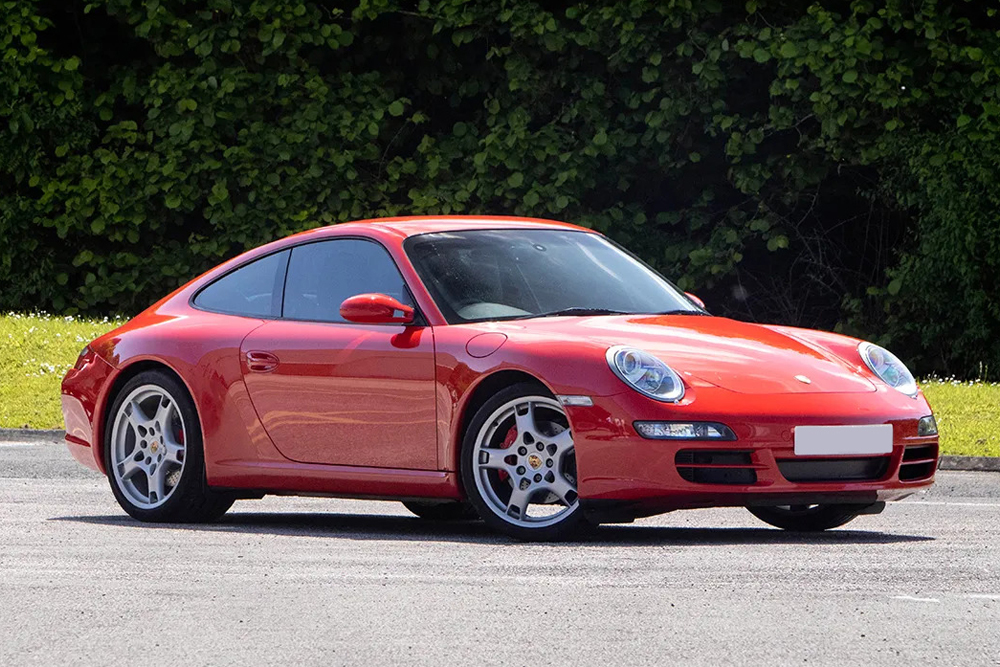
Bridging the gap between classic and contemporary, the 2005 Porsche 911 Carrera 2S (997 generation) is widely viewed as a sweet spot: modern enough to use without fuss, yet still compact and “mechanical” in the way enthusiasts love. The example featured on the CCI site follows that recipe closely, listed as a right-hand-drive manual with 26,000 miles (under 30,000 miles), making it a pristine gateway into the 997 world.
When Porsche AG introduced the 997 in 2005, the brief was to refine rather than reinvent. Porsche’s own historical overview describes it as a kind of super-facelift of the 996, but also notes how different it feels from the driver’s seat and how the design returned to cleaner shapes reminiscent of earlier generations. Independent guides echo that intent, highlighting the return to round headlamps and a more traditional 911 “face” after the 996 era.
Driving feel and flat-six character
For the passionate driver, the 997 delivers something increasingly rare: hydraulically assisted steering that communicates, rather than filters. That matters because later 911 generations (starting with the 991) moved to electric-assisted steering, a change that drew attention precisely because the hydraulic benchmark for feel was so high.
The headline mechanicals back up the sensation. Period specifications for the Carrera S cite a 3.8-litre naturally aspirated flat-six producing 355 hp (261 kW) and 400 Nm, with peak power at 6,600 rpm and a rev limit around 7,300 rpm. In manual form, it’s commonly quoted at roughly 4.8 seconds to 100 km/h with a top speed of 293 km/h. The mixture of pace and character is the point: flexible in daily driving, then alive and vocal as you chase the top end—exactly the “flat-six to 7,000 rpm” surge your brief celebrates.
Part of the confidence comes from the Carrera S hardware. Period specifications list fixed four-piston calipers front and rear with 330 mm cross-drilled, ventilated discs, and they note that the car was offered with a 6-speed manual or a 5-speed Tiptronic S. In real driving, that translates to strong, repeatable braking and a chassis that feels built for fast road work rather than one heroic stop.
Pair that engine with a six-speed manual and the 997 becomes its best self. The manual isn’t here to win a spec-sheet war; it’s here to give you control, rhythm, and that sense you’re piloting the car rather than instructing it—an increasingly rare trait in today’s paddle-shift landscape.
Everyday comfort with real Australian usability
The 997 isn’t just about theatre; it’s also a genuinely usable grand-tourer. Compared with rawer classics, it layers in comfort without sanding away the core sensation of a rear-engined 911. The CCI listing stresses that Teutonic cabin quality—tight panels, quality leather, climate control, and Bose audio—so it can be enjoyed as a “useable classic” rather than a fragile trophy.
That’s why this car makes sense in Australia. It can be civil in traffic, comfortable on longer runs, and still thrilling when the road opens up—whether that’s a weekday commute in Brisbane or a weekend escape into the Adelaide Hills. And because the 911 story is rooted in endurance racing credibility, including the manufacturer’s record-setting overall and class victories at the 24 Hours of Le Mans, the car carries a motorsport halo wherever it goes—whether that’s a dinner booking at Quay or a track day at Phillip Island Grand Prix Circuit.
In the local early-2000s context, it also highlights the gap between international and domestic performance. Even the best offerings from Holden and Ford leaned on big power and character, but few offered this blend of finesse, fit-and-finish, and global prestige.
Collectability, market signals, and what smart buyers check
The “why it’s special” case for a 997 Carrera 2S has strengthened with time. Many buyers now view the 997 as a modern classic: the last era of hydraulic steering feel before the 991 adopted electric assistance and grew in wheelbase and length. That combination—compact proportions plus the older style of steering feedback—is a big part of the “end of an era” narrative around cars like this.
Market commentary supports the direction of travel. Recent pricing analysis highlights firm values for well-specified examples and notes that later 997.2 cars can command a premium, partly because the 997.2 introduced direct-fuel-injection engines and brought in PDK—updates many buyers associate with reduced early-engine anxiety and improved everyday efficiency.
Due diligence still matters, especially with 997.1 engines. Two areas are worth treating as real research items rather than pub talk. One is the intermediate shaft (IMS) bearing discussion: specialist guidance explains that different IMS bearing designs exist across M96/M97 engines and that which version a specific car has can depend on engine type and serial number. In specialist reporting, the early-2000s “problem years” are associated with higher failure rates, while the later MY06–08 non-serviceable bearing is described as having a low incidence of failure.
The other is cylinder bore scoring. Specialist buyer guides and technical resources describe bore scoring as a known risk on some 997.1 engines, particularly 3.8-litre variants, and they list symptoms such as ticking noises, smoke, and increasing oil consumption. The practical safeguard is simple: a proper pre-purchase inspection that includes a borescope inspection, matched with careful review of servicing and oil-use history.
Finally, treat low mileage with the respect it deserves. Low miles add value, but cars also age when they sit: tyres harden, fluids degrade, batteries weaken, and rubber components can dry. A low-mile 997 that has been serviced on time and exercised regularly is typically a better long-term companion than one that has simply been parked.
Secure Your Piece of Porsche Legacy with Confidence
A 2005 997 Carrera 2S in manual form is one of the most satisfying ways into modern 911 ownership: hydraulic steering feel, a high-revving naturally aspirated 3.8-litre flat-six, and a cabin that’s comfortable enough to use whenever the mood strikes. With under 30,000 miles listed, this example represents the kind of “buy right, enjoy lightly” Porsche that can deliver joy today while still making sense as a longer-term hold.
CCI | Classic Car Imports can help you secure the right 997 with confidence—whether it’s this low-mile manual or another investment-grade example sourced to your exact specification. From verification and inspection through shipping, compliance, and registration, the goal is simple: you enjoy the drive, while the details are handled properly.
References
- CCI vehicle listing page for the 2005 Porsche 911 (997) Carrera 2S (mileage, transmission, market positioning).
- Porsche Newsroom history piece describing how the 997 (introduced 2005) relates to the 996 and its return to “clean shapes.”
- Model history overview of the 997 (styling cues including the return to round headlights).
- Australian specification and performance data for the 2005 Carrera S (power, torque, 0–100 km/h, top speed).
- Period specification sheet including rev limit and braking specification.
- Australian editorial discussion of the 991’s move to electric power steering.
- Porsche Newsroom motorsport background on the manufacturer’s Le Mans record and class totals.
- LN Engineering technical guidance on IMS bearing design variants and failure incidence.
- Specialist guidance on bore scoring (affected engines/years, symptoms, inspection recommendations).
- UK market overview of current 997 pricing and why later 997.2 examples can carry a premium.
- Hagerty UK commentary on why the 997 Carrera S is considered among the most desirable modern 911s (steering feel, usable performance).
Frequently asked questions
1. What exactly makes a 2005 997 Carrera 2S feel “different” from newer 911s?
The core difference is the combination of its hydraulic steering assistance and its compact pre-991 footprint. The next-generation 991 moved to electric-assisted steering and adopted a larger platform (including a longer wheelbase), which changes the feedback and the sense of size from the driver’s seat.
2. Are the 2005 Carrera S performance figures still relevant today?
Yes. Period specifications quote 355 hp (261 kW), 400 Nm, and around 4.8 seconds to 100 km/h with a top speed near 293 km/h for the manual car—numbers that remain genuinely fast on public roads, especially given the 911’s traction and composure.
3. Why does the manual gearbox matter so much for collectability?
Because it reinforces what buyers seek in a “modern classic”: driver involvement. The market narrative around the best 997s often focuses on analogue feel (steering, engine character) and control. A manual transmission aligns with that theme, and this particular listing is positioned around that purity-of-control appeal.
4. What are the key mechanical risks to check on a 997.1 Carrera S?
The two commonly researched topics are IMS-bearing design variants (which can vary by engine/serial number, with different reported failure incidence) and cylinder bore scoring (particularly flagged on some 3.8-litre 997.1 engines). The practical response is a detailed specialist inspection, including borescope work, plus clear service and oil-use history.
5. Does low mileage automatically mean “better”?
Low mileage is valuable, but it isn’t a free pass. A lightly used car can still need recommissioning and careful inspection, especially if it has sat for long periods. Regular servicing and sensible, consistent use tend to produce the best outcomes for long-term ownership.
6. Why do some buyers pay more for a 997.2 instead of a 997.1?
Recent market commentary notes that 997.2 cars can command a premium, in part because of the mechanical and drivetrain updates that arrived with the refresh, including direct-fuel-injection engines and the introduction of PDK. That doesn’t make a 997.1 a bad choice—manual 997.1 cars remain highly desirable—but it explains the pricing split in the wider market.